Scaling Success: A Strategic Guide to AI for Marketing
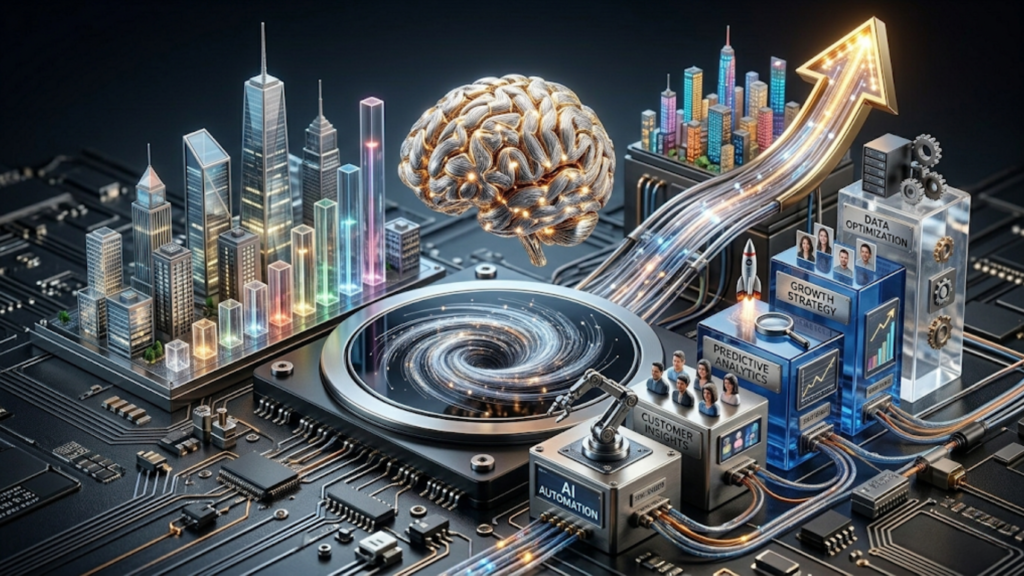
The role of artificial intelligence in the marketing world has moved from experimental to foundational. Today, leveraging AI for marketing is no longer about testing the waters with a single chatbot or generating a few social media captions. It is about building a cohesive ecosystem where data, automation, and human creativity work in perfect harmony.
As marketing teams face increasing pressure to deliver personalized experiences at scale, manual processes simply cannot keep up. Businesses that successfully integrate AI into their core operations are seeing significant improvements in efficiency, customer retention, and overall ROI. This guide explores how to strategically implement AI for marketing to drive meaningful business results.
From Generative Tools to Autonomous Agents
The early focus on generative AI focused primarily on speed—writing faster emails or creating images in seconds. While those capabilities remain vital, the current shift is toward autonomous marketing agents. These are specialized AI systems designed to manage end-to-end workflows with minimal intervention.
Instead of just writing a post, an autonomous agent can now analyze trending topics, cross-reference them with your brand’s historical performance data, draft the content, schedule it for the optimal time, and adjust the distribution strategy based on real-time engagement metrics.
- End-to-End Campaign Management: Automation of repetitive tasks from media buying to reporting.
- Behavioral Triggers: AI systems that deploy specific marketing sequences based on granular user actions.
- Cross-Platform Consistency: Maintaining a unified brand voice across fragmented digital channels through AI-governed style guides.
Hyper-Personalization and the Customer Journey
One of the most powerful applications of AI for marketing is the ability to deliver hyper-personalized experiences. We have moved past simple “First Name” tags in emails. Modern AI analyzes vast amounts of zero-party and first-party data to predict what a customer needs before they even search for it.
Predictive Customer Insights
By analyzing past purchase behavior, browsing history, and even sentiment analysis from customer service interactions, AI can identify patterns that humans might miss. This allows marketers to move from reactive strategies to predictive ones, offering solutions to customers at the exact moment of intent.
Dynamic Creative Optimization
AI now allows for real-time adjustments to creative assets. If a user in a specific demographic interacts with a video ad, the AI can automatically swap out the background, CTA, or music in the next iteration to better suit that individual’s preferences. This level of customization ensures that every touchpoint feels relevant and personal.
Practical Strategies for Marketing Leaders
Implementing AI effectively requires a shift in mindset. It is not about replacing your team, but about elevating their capabilities. Here are actionable ways to integrate these technologies:
- Audit Your Tech Stack: Identify where manual bottlenecks exist. If your team is spending hours on data entry or basic reporting, these are the first areas to automate.
- Focus on Data Cleanliness: AI is only as good as the data it consumes. Ensure your customer data platforms are organized and integrated.
- Implement AI-Driven A/B Testing: Use AI to run hundreds of micro-tests simultaneously, rather than waiting weeks for a single manual test to conclude.
- Adopt a “Human-in-the-Loop” Model: Always have a strategic lead oversee AI outputs to ensure brand alignment and emotional resonance.
Common Mistakes to Avoid
While the benefits are clear, there are several pitfalls that can hinder your progress when using AI for marketing:
- Losing the Brand Voice: Over-reliance on automated generation can lead to a generic brand identity. Always inject human perspective and unique brand insights into AI-generated drafts.
- Ignoring Data Privacy: With great data comes great responsibility. Ensure your AI tools comply with the latest global privacy regulations and that you are transparent with your audience about how their data is used.
- The “Set It and Forget It” Mentality: AI requires ongoing monitoring. Algorithms can drift, and consumer trends can change overnight. Regular audits of your AI workflows are essential.
- Focusing on Tools Over Strategy: A shiny new AI tool won’t fix a broken marketing strategy. Start with your goals first, then find the technology that helps you achieve them.
The Vital Role of Human Oversight
Despite the power of automation, the most successful marketing remains deeply human. AI excels at processing data, identifying patterns, and scaling execution. However, humans excel at empathy, cultural nuance, and disruptive creativity. The goal of AI for marketing is to free up your team’s time so they can focus on high-level strategy and storytelling—the things that truly build long-term brand loyalty.
Frequently Asked Questions
Does AI for marketing replace the need for a creative team?
No. AI acts as a co-pilot. It handles the heavy lifting of data analysis and initial drafting, allowing your creative team to focus on high-level concepts, emotional storytelling, and strategic direction.
Is AI only for large enterprises with big budgets?
Not anymore. There are scalable AI solutions available for businesses of all sizes. Many platforms offer tiered pricing that allows smaller teams to access powerful automation and analytics tools.
How does AI help with SEO and content strategy?
AI helps by identifying content gaps, analyzing search intent more accurately, and optimizing technical SEO elements. It ensures your content is structured in a way that is both discoverable by search engines and valuable to readers.
Can AI help improve my marketing ROI?
Yes. By automating repetitive tasks, reducing wasted ad spend through better targeting, and increasing conversion rates via personalization, AI directly contributes to a more efficient and profitable marketing department.
What is the first step to integrating AI into my marketing?
The best first step is to identify a single, repetitive task—such as email segmentation or social media scheduling—and implement an AI solution to manage it. Once you see success, you can gradually expand to more complex workflows.
Final Takeaway
The integration of AI for marketing is no longer a luxury—it is a competitive necessity. By focusing on predictive insights, autonomous workflows, and hyper-personalization, brands can build deeper connections with their audiences. Use AI to handle the scale and the data, and use your team to provide the soul and the strategy. This balanced approach is the key to sustainable growth in the modern marketplace.